街道的观看语法:走入薇薇安·迈尔眼里的美国
The Syntax of the Streets: Inhabiting Vivian Maier’s America
By: Yuanxi Li 李沅熹
I visited Vivian Maier: Unseen Work at Fotografiska Shanghai on April 15, an exhibition curated by Anne Morin that runs through July and presents approximately 220 photographs alongside Super 8 footage.
2026年4月15日,我参观了Fotografiska上海馆正在展出的《薇薇安·迈尔:未见之作》。展览由安·莫兰策划,持续至七月,呈现约220张照片及超8毫米胶片影像。
Given Maier’s ubiquitous fame and the well-worn mythology surrounding her posthumous discovery, I entered expecting a predictable, documentary-style retrospective. Instead, I found a highly effective architectural translation of her gaze—a demanding but rewarding experience that showed me how spatial curating can reconstruct a historical perspective.
以迈尔的盛名,和那段早已流传甚广的,关于她过世后作品是如何重见天日的故事,我本以为会看到一场中规中矩的纪录式回顾展。但呈现在眼前的是和我预期中截然不同的空间语言——这是一种需要全神贯注却不虚此行的体验,让我看见了空间策展如何重建一种历史性的观看方式。
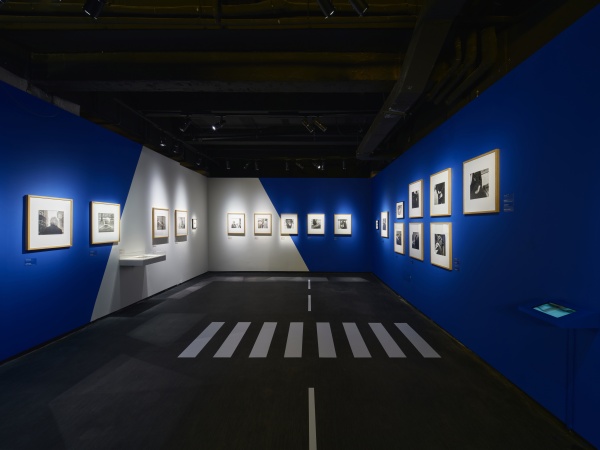
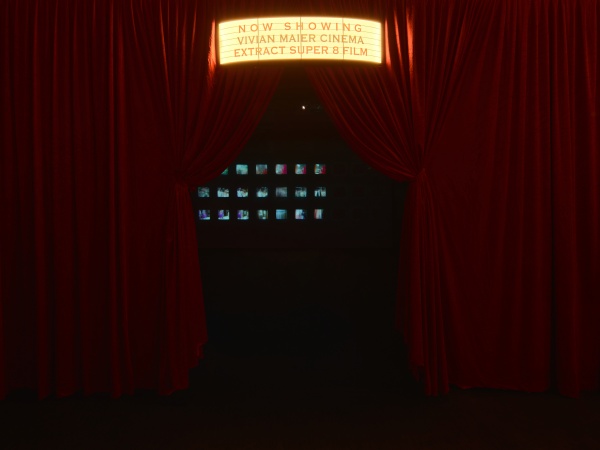
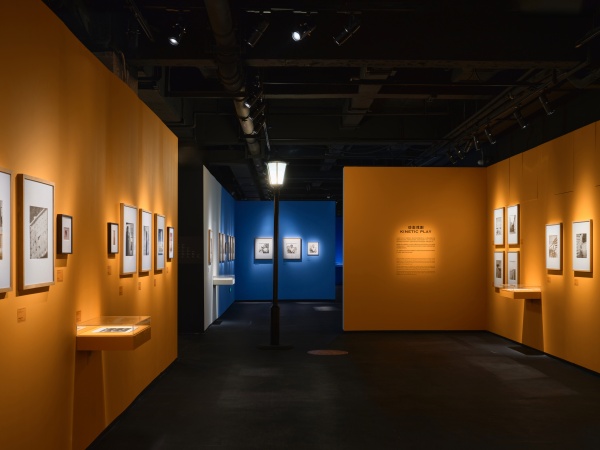
The scenography refused the passive neutrality of the traditional white cube. By integrating physical urban interventions into the gallery—a painted zebra crossing, a solitary glowing streetlamp, and the heavy velvet curtains of a simulated cinema—the exhibition translates Maier’s photographic language into a spatial environment I moved through. These elements materialized what the wall text described as Maier’s “Theater of the Ordinary”—rebuilding the urban fabric of New York and Chicago from the 1950s to the 1990s, placing me within an echo of the environments that shaped her vision.
展览设计彻底抛弃了传统纯白空间的抽离与克制。展厅内嵌入了实体的城市元素——地面上的斑马线、孤立的发光路灯、仿影院厚重的天鹅绒幕帘——展览把迈尔的摄影语言升维成了一个能够让我置身其中的空间场域。上世纪50到90年代纽约和芝加哥的城市肌理在此重现,展墙上所谓的“日常剧场”由此变得触手可及。穿行其中,我仿佛走进了那个曾塑造她摄影视角的时代。
This spatial reconstruction began with self-documentation. The self-portrait section established the premise through a circular mirror installation embedded in the wall. Standing before it, my reflection merged with Maier’s enlarged self-portrait on the opposite wall. This is the exhibition’s explicit invitation: step into her frame, occupy the same visual plane she inhabited decades ago. The effect was immediate—I became co-subject in her act of self-documentation.
展览以“自画像”系列开篇。展墙上嵌入圆镜,当我伫立镜前时,我的身影便与身后墙上的迈尔自画像在镜面内同框,按下快门的瞬间,定格了一张跨越时空的双人合影。展览借此发出了邀请:走进她的镜头,站在她几十年前所处的同一个视觉维度。于是,我在她的自我凝视中成为了与她并肩的共同主体。
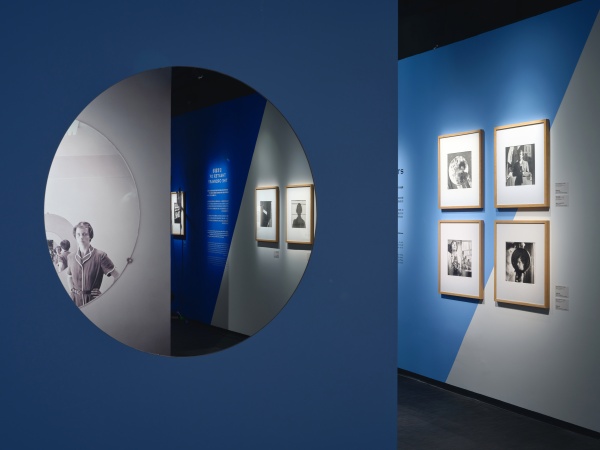
Beyond this entry point, mirrors and reflective surfaces recur throughout the galleries. When I caught my own reflection mid-stride, I understood why Maier compulsively photographed herself in storefront glass. The mirrors confirmed what she meant when she described herself as “sort of a spy.” She had to mark her presence—establish herself as observer—before she could document anyone else.
穿过入口,镜子与反光面在展厅中如影随形。步履间猝然瞥见自己的倒影,我忽然理解了迈尔那份执拗——她为何总要对着橱窗玻璃一遍遍拍下自己。镜面确证了她自诩“间谍”的隐喻:在按下快门之前,她必须标记她的存在,以此确立自己作为观察者的身份,才能去捕捉芸芸众生。
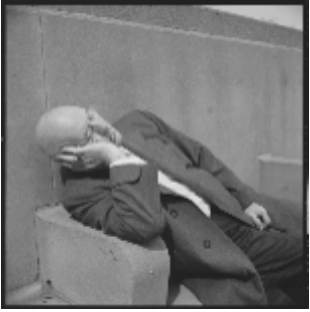
As I moved deeper, the routing contracted into her scanning syntax. Street photographs opened wide—storefronts, crowds, urban geometries. The frame then tightened to figures: men in suits positioned at edges, exhaustion visible beneath formal dress. These workers occupy the physical coordinates of mid-century American prosperity while remaining structurally exterior to it. The suit functions as uniform, not passage. In Maier’s work, the American Dream appears not as an aspiration but as a backdrop—something experienced from the outside. As a nanny—part of what the exhibition notes describe as the invisible working class—her camera captured what she lived: the distance between promise and position.
步入深处,空间动线顺势收拢,微妙地复刻了她取景时的视觉缩放。先是宏大的街景平铺开来——商铺、人潮、城市的骨架。随后,焦距拉近对准具体人物:徘徊在边缘的西装男子,体面之下是掩藏不住的疲惫。这群劳动者生活在美国世纪中叶的繁荣盛世里,却被死死挡在核心阶层的门外。西装只是他们的工装,而非跨越阶级的通道。在迈尔的镜头下,“美国梦”褪去了励志的光环,沦为一块布景板——那是他们永远只能隔岸观火的幻景。作为一个保姆——也就是展墙上定义的“隐形工人阶级”——她用相机捕捉了自己最真实的处境:空头支票与现实地位之间的天壤之别。
Then the frame shifts to children. Maier spent nearly four decades as a nanny, embedded in the daily lives of the children she cared for. She photographed mid-tantrum grimaces, distracted gazes, unguarded boredom. I wondered if extended contact with children sharpened this particular way of seeing. She approached the visual field as children do: without predetermined categories, treating the everyday as a site of open possibility. The photographs felt alive to me because they documented discovery rather than arrangement.
随后,目光转向了孩子。迈尔当了近四十年的保姆,生活在那些她照料的孩子们的日常之中。她拍下他们闹脾气时的神态、游离的视线以及毫不设防的发呆。我暗想,或许正是长期与孩子们的共处,淬炼了她这种特别的眼光。她凝视世界的方式和孩子一样:抛弃所有世俗预设的框架,将平庸的日常视作充满无限可能的现场。这些照片极具生命力——因为她在“抓取”生活,而不是在“摆拍”生活。
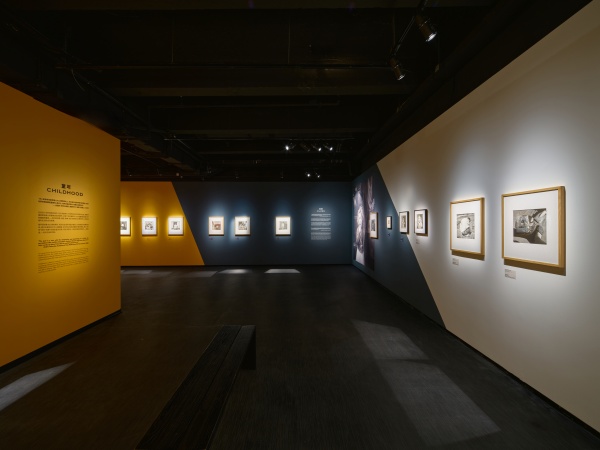
Finally, the exhibition contracts into extreme close-ups. Newspaper scraps. Coffee cups. Fabric folds. By this point I was looking at Maier’s return to materiality itself—the stubborn thereness captured in objects after bodies exit the frame.
最终,展览在极致的特写中收尾。报纸的残片、咖啡杯、织物的褶皱。此时我看到的,是迈尔对纯粹物质性的回归——人物褪出了取景框,她记录着物品自身那种无可争辩的存在感。
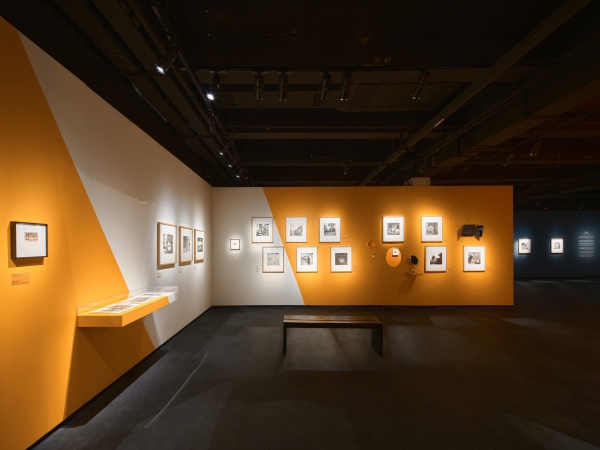
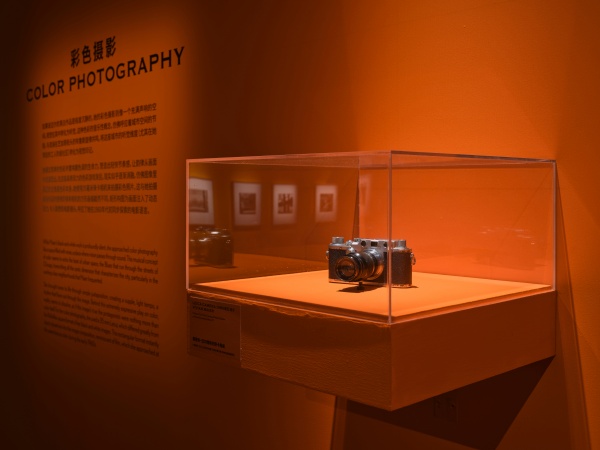
The exhibition’s spatial logic stumbles at one point. The color section—positioned mid-route between the street portraits and the childhood gallery—fractures the black-and-white progression. Even though Morin’s curatorial text frames these works as “a space filled with noise,” color functioning as aural translation of urban rhythm, the mid-corridor placement undermines the exhibition’s logic. Isolating these color experiments in a dedicated gallery would have granted them space to establish their own rhythm. The saturated orange walls compound the problem, competing with the photographs’ chromatic play rather than supporting it. As installed, the section felt uncertain to me. I couldn’t tell whether that uncertainty reflected Maier’s late experiments or the exhibition’s staging choices.
整个展览的空间叙事在某一点上失去了连贯性。夹在街头肖像区和童年展厅之间的彩色摄影,生硬地打断了黑白作品的叙事推进。虽然莫兰在策展前言里把这些作品形容为“噪音空间”,迈尔试图用色彩来转译城市的喧嚣节奏,但把它们安置在过道中的做法却破坏了展览的整体逻辑。假如把这些色彩实验单独剥离出来,放进独立展厅,它们完全能建立起属于自己的视觉律动。大面积饱和的橙色墙面则让情况变得更糟,它没有起到烘托的作用,反而与照片本身的色彩张力相互撕扯。走在这个展区里,我感到一种明显的不确定感,以至于我分不清,这份不确定到底是迈尔晚期色彩实验本身的摇摆,还是展览陈列方式带来的误导。
This exhibition reconstructed Maier’s scanning syntax, her choices about what merited the frame. This spatial translation of the photographer’s subjective vision made it succeed for me. Most photography exhibitions default to chronological wall displays with biographical captions. Morin’s scenography demonstrates that curatorial architecture can function as analytical method. The mirrors, the streetlamp, the painted crosswalk—these are arguments about how vision works. This distinction between reading about vision and inhabiting vision defines what immersive exhibitions can achieve. To understand a photographer’s America, I had to first inhabit her syntax of seeing. Wall text can explain why Maier compulsively documented her own reflection. Spatial curating made me experience the compulsion.
展览复原了迈尔扫视世界的逻辑,展现了她决定将何种事物框入镜头的取舍过程。正是这种将摄影师主观视野转化为空间体验的做法,彻底打动了我。常规的纪录式摄影展往往沦为时间轴陈列与生平注脚的堆砌,但《薇薇安·迈尔:未见之作》的场景设计却证明了:策展的空间架构本身就可以成为解构作品的方法论。展厅里的镜子、路灯和斑马线不只是装饰,而是在探讨视觉机制的运作方式。是仅仅在纸面上“读懂”视觉,还是亲身“步入”视觉之中?这种体验上的根本差异,定义了沉浸式展览所能实现的境界。想要真正看懂和理解这位摄影师眼里的美国,我必须最先身处于她观看的语法中。文字说明固然能解释迈尔为何偏执于记录自己的倒影,但只有漫步在这个策展空间里,我才真正共情了那份偏执。